
Will online lessons work for a young child?
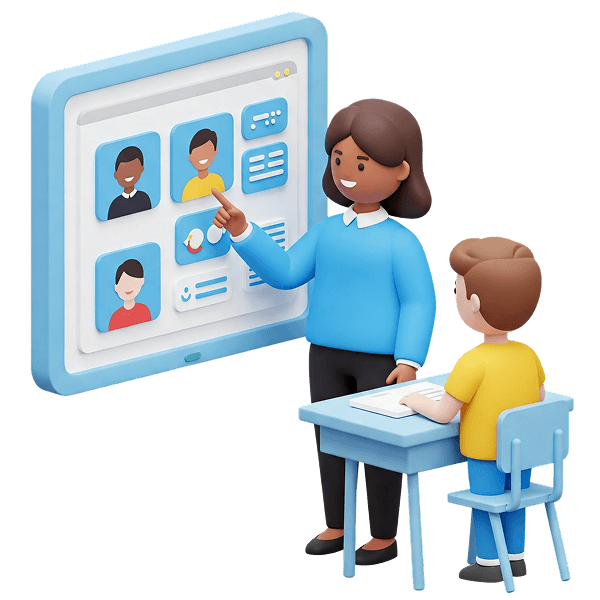
Yes, for most children from about five, provided the lesson is 1-on-1, short, and taught by someone used to young children. A young child cannot hold attention in a group on a screen — but with one adult speaking only to them, and a lesson of around half an hour, most settle within two or three sessions.
Parents of younger children ask this more than any other question, and they are right to. A seven-year-old cannot be left to get on with a screen the way a teenager can, and plenty of online learning is designed as though they could.
What makes it work
- One adult, one child. This is the whole difference. A young child in a group on a screen drifts within minutes, because nothing requires them. Spoken to directly, they stay because they are being asked something every minute or two.
- Short lessons. Around thirty minutes suits most children under about nine. An hour of screen teaching sounds like better value and is usually twenty-five minutes of teaching and thirty-five of drift.
- A teacher who teaches children. Teaching a six-year-old through a screen is a specific skill: more questions, shorter turns, visible praise, and knowing when to switch activity before attention goes rather than after.
- The same time each week. Young children settle into routine far faster than into content. A fixed slot does more for consistency than any amount of encouragement.
- A parent nearby, not beside them. In the room but doing something else. Close enough to fix a connection or a wobble, far enough that the lesson belongs to the child.
What does not work
- Recorded videos. Nothing requires a response, so nothing holds attention. For this age they are a supplement at best.
- Large groups. Past three or four children, a young child becomes an audience member and behaves like one.
- Lessons at the end of the day. After school and after dinner is the worst slot available. Earlier, or at the weekend, is worth the inconvenience.
- A phone screen. Too small to share work on. A tablet is the minimum, a laptop is better.
What you need at home
- A laptop or tablet, and a reliable connection.
- Headphones — they cut the room out and help more than anything else on this list.
- Paper and a pencil. Most of the thinking still happens on paper at this age.
- A table, not a bed or a sofa.
- A quiet half hour, with the television off.
How to tell in four weeks whether it is working
Do not judge it on marks this early. After about four lessons, look for these instead:
- They stop asking whether they have to do it.
- They mention the teacher by name, unprompted.
- Homework in that subject takes less arguing, even if it is not yet quicker.
- They correct themselves out loud — a sign they are thinking rather than guessing.
- You can say which topic they are working on, because someone told you.